Tools
Light is the strongest time cue. It can help you reset your circadian clock and assist with winter depression. Light therapy lamps have established themselves as the standard device for light therapy, and they still are. However, these lamps require sitting in front of them at a close distance for 30-60 minutes in the morning. Many people find this cumbersome [1].
Light therapy glasses are a great alternative to stationary lamps.
Light Therapy on the Go
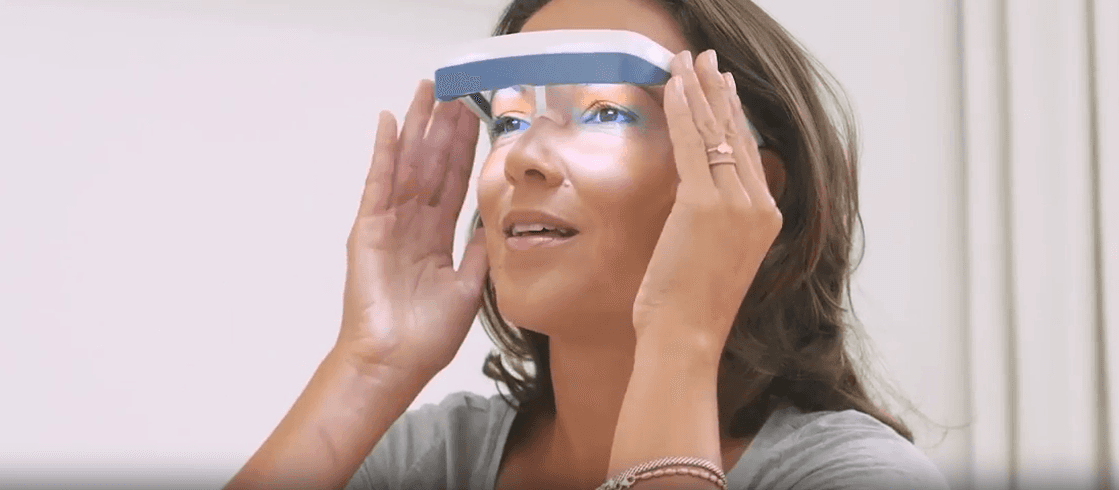
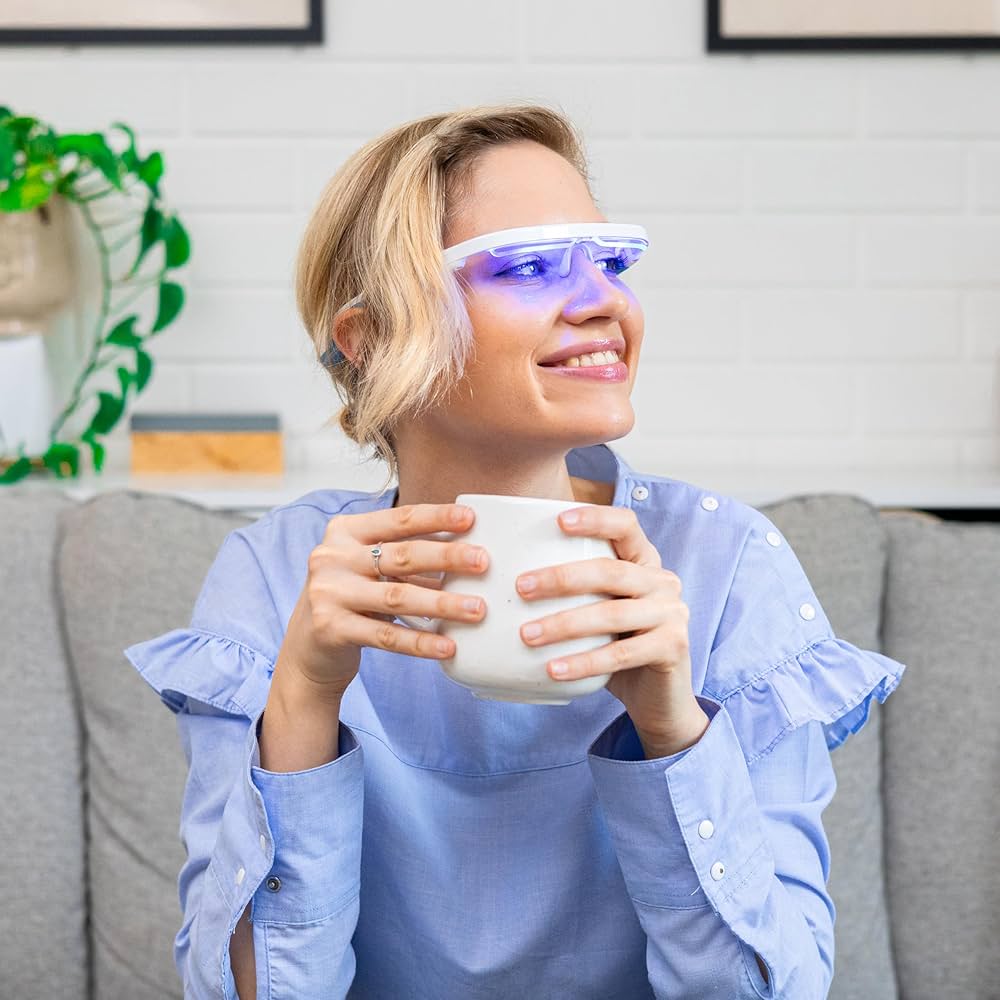
Light therapy glasses, also known as light wearables or light visors, provide a portable solution for light therapy. Worn like glasses, integrated LEDs illuminate the eyes from the inside of the frame, allowing for location-independent light therapy. Compared to daylight lamps, it also has the advantage that the distance of the eyes to the light source and the angle of illumination are optimal (or as intended by the manufacturers) throughout the entire session.
Unlike the classic recommendation of 5000-10000 Lux for daylight lamps [4], the light therapy glasses take advantage of the fact that the ipRGC cells in the eye responsible for changes in the circadian clock are most sensitive in the blue-green wavelength range (peaking around 480 nanometers). It has been shown that significantly lower intensities (~100 Lux) with such wavelengths are already capable of influencing our circadian system [2,3]. The light emitted by the glasses is usually either blue, green, or white light enriched with blue, with intensities well below 10,000 Lux.
The first light therapy glasses on the market were the Luminette from the Belgian startup Lucimed, released in 2006. Since then, a handful of competitors have entered the market, focusing on different aspects (compact design, classic glasses look, insomnia treatment). As light therapy glasses have not yet truly reached the mainstream market, most of the currently available products are backed by startups/university spin-offs, which are built on a strong scientific foundation and focus exclusively on this product. This results in (for me) a good credibility of the products.
Conclusion
Light therapy glasses are an innovative approach to light therapy, making it easier to consistently stay on track with treatment. Wavelength, intensity, and angle are optimized for effectiveness and comfort and remain so as you move around your home. While the freedom of movement with light therapy glasses may be a significant advantage over treatment with daylight lamps for some, others may not prefer wearing a futuristic-looking lighting device on their face. Whatever you prefer, having alternatives to choose from can help you select the solution that works best for you and effectively improves your situation.