Tools
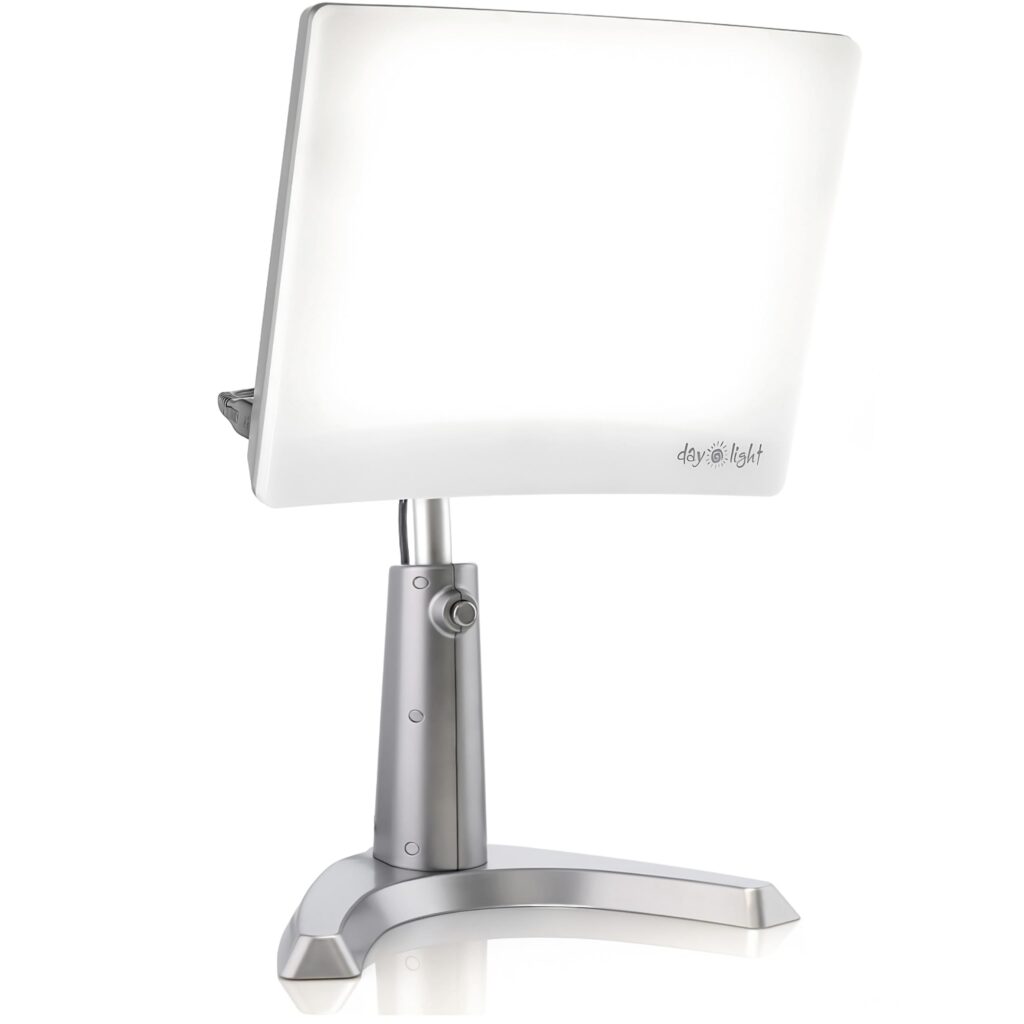
Daylight lamps are lamps that are specifically designed to provide bright light when no natural bright light is available. Since they are a first-line treatment for winter depression (seasonal affective disorder, SAD), they are also referred to as light therapy lamps . The only difference is that products marketed as the latter must be certified as medical devices.
What to consider when choosing a light therapy lamp?
Daylight lamps are typically marketed as 10,000 lux. While this is indeed the gold standard for bright light therapy, it’s a misleading feature to base your purchase on. After reading this section, you will understand why that is and what to look for instead. The following factors are a personal selection, derived from my own experience as well as talks with researchers and clinicians.
Size: Look for lamps with a large illuminated area
Why is the term "10,000 lux" a misleading feature to look for in a light therapy lamp? This is because the lux value (illumination strength) is not a measure of how bright the lamp is (luminance). Lux values indicate how much light reaches your eyes from a specific distance to the lamp (calculated as lumens/m²). This value decreases significantly with increasing distance from the lamp. A real-life example:
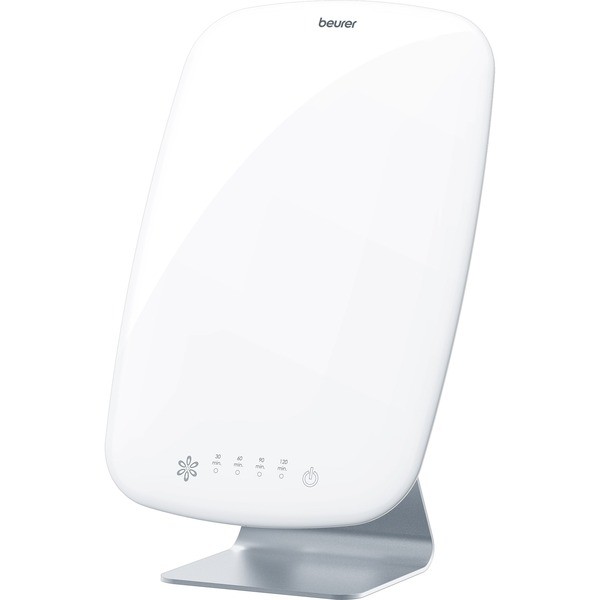
Beurer TL30:
Advertised as 10,000 lux – but at what distance? Let’s look closer at the specs:
10,000 lux at 10 cm (hold a sheet of paper at this distance in front of your face. Unrealistic for daily use)
5,000 lux at 20 cm (still not realistic)
2,500 lux at 30 cm (still very close)
1,250 lux at 40 cm (manageable)
625 lux at 50 cm (now it gets realistic - but it's no longer bright light)
Spectrum
Many products are labeled as “full-spectrum daylight.” However, this does not necessarily mean something specific. There are certain light wavelengths that influence your circadian system more than others, but common LEDs deliver most of these relevant wavelengths anyway – and are therefore generally well-suited.
Mobility/Design
Choose a lamp that you want to use every day, and place it in a location that encourages you to do so.