Circadian rhythm
Why do we wake up or fall asleep? If you have never heard of the circadian rhythm, this is the right article for you!
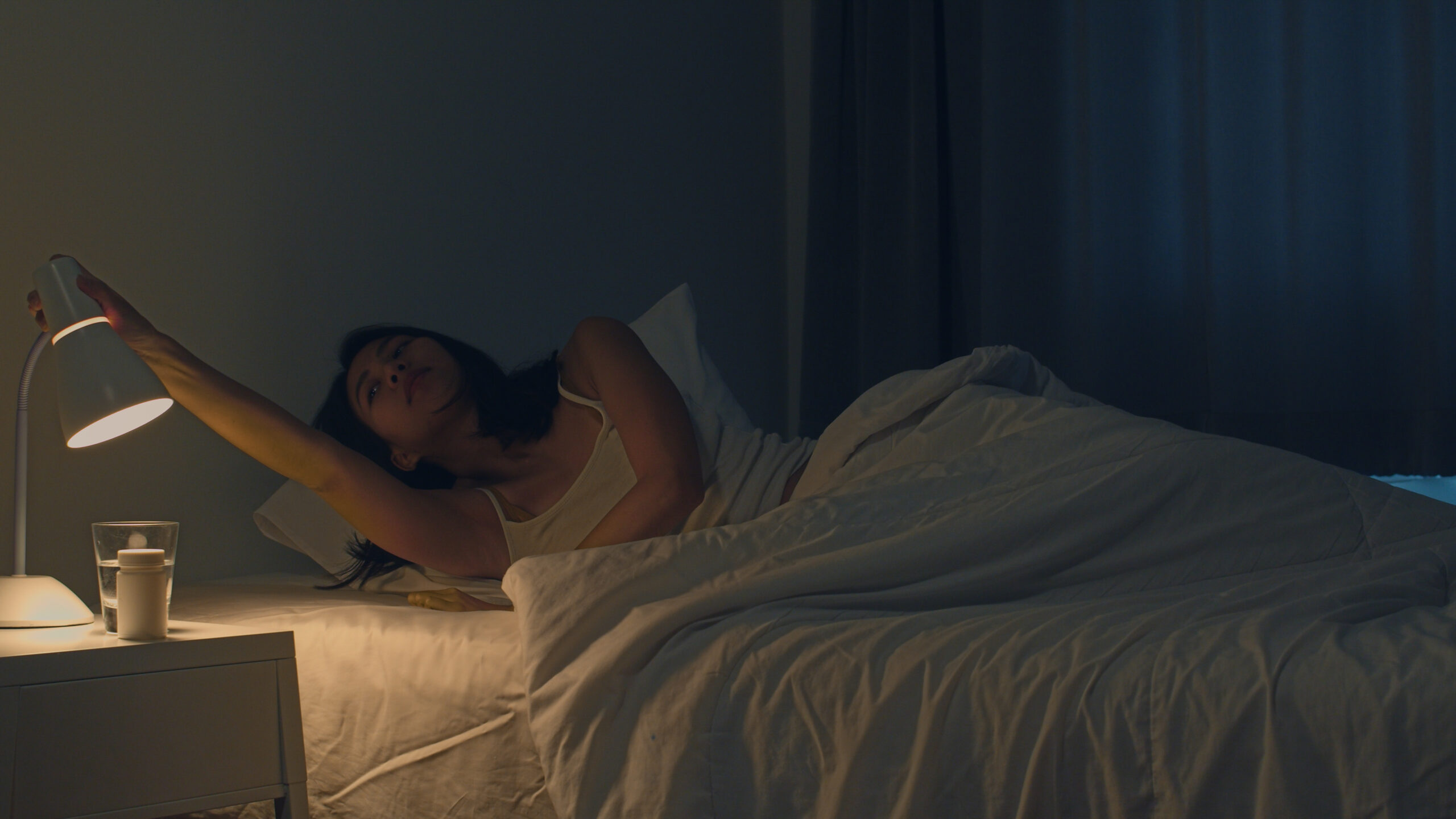
As diurnal creatures, humans have developed to wake up in the morning and go to sleep in the evening [1]. When two researchers spent more than a month in a cave without daylight or other external time cues in 1938, they found that their sleep-wake cycle still repeated, albeit at a rhythm that was slightly longer than 24 hours [2]. Today we know that there is a process in the cells of humans and other living beings that functions like an internal clock. It repeats over a period of about 24 hours and sets the natural times for activity and rest. This internal clock is called the circadian rhythm, from the Latin “circa” meaning “around” and “diem” meaning “day.” The circadian rhythm in the cells of our bodies is regulated by a “master clock” situated in the suprachiasmatic nucleus (SCN) in the hypothalamus of our brain [3].
What makes us feel awake or tired?
There are two different factors that influence our activity level. The first is the homeostatic sleep pressure. It increases linearly with the time we are awake and decreases during sleep. The other factor is the circadian rhythm. Throughout the day, it regulates our level of alertness through the hormones Cortisol and Melatonin. The “stress hormone” cortisol activates the body and mind. It rises in the biological morning (i.e., morning according to the internal clock) and decreases in the biological evening. The opposite is true for the “sleep hormone” melatonin, whose increase in the evening and night causes tiredness, before it decreases in the biological morning [4].
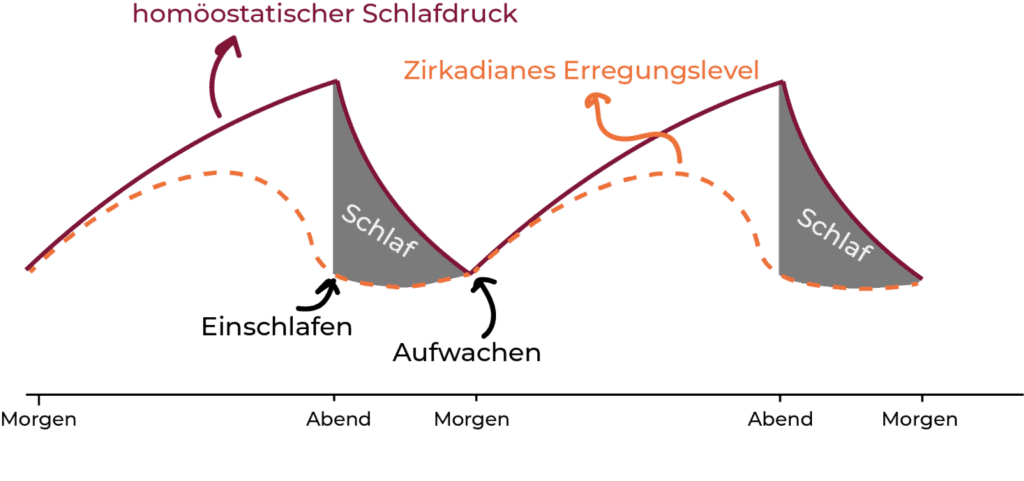
Sleep is favored by a high homeostatic sleep pressure (purple line) and a low circadian arousal level (orange, dashed line). This interplay of these two factors is known as the two-process model of sleep regulation [4].
What does my circadian rhythm depend on?
The circadian rhythm differs from person to person in period and phase. This means that a free-running cycle can last, for example, 23:50 or 24:30 for different people [5]. Additionally, some people naturally tend to wake up earlier (so-called “larks”), while others tend to stay awake longer (“owls”) [6]. These tendencies are genetically determined, but they also vary with age: In youth, our circadian rhythm experiences a delay – we tend to become owls – whereas it shifts forward as we get older. For this reason, older people tend to get up earlier in the morning [7].
You can find more information in our blog post "What determines my circadian rhythm?".
How can I influence my rhythm?
To prevent the approximately 24-hour circadian rhythm from deviating from the actual times of day over time, it synchronizes itself with certain external time indicators, such as (day)light. These so-called zeitgebers can advance or delay the circadian clock slightly. The extent and direction of the shift depend on the type of zeitgeber and the timing of the stimulation [8]. The dominant zeitgeber is light, but stimuli such as physical activity, food intake, or externally administered melatonin (e.g., in tablet form) have also been shown to influence the circadian phase, i.e., the time of the internal clock [9,10,11,12].
This website helps you better understand your own rhythm and raises awareness of the risks and issues associated with significant deviations between the internal and external clock. Above all, it will provide you with scientific insights into how you can influence your circadian rhythm to make it easier to get out of bed, stay energized throughout the day, or fall asleep faster in the evening. Make your circadian rhythm your ally to be your best self.